Developer Blog: Spatial Ops
- Community
*Interview has been edited for readability and length.
*So far in our bHaptics Community blog series, we’ve interviewed a Content Creator and a Modder. But there is another category of hero that make our community as amazing as it is! Game Developers!
Today, we’re sat down with the team from Resolution Games to learn more about their amazing game Spatial Ops, and their journey to getting their game bHapticsReady!
Please introduce your game!
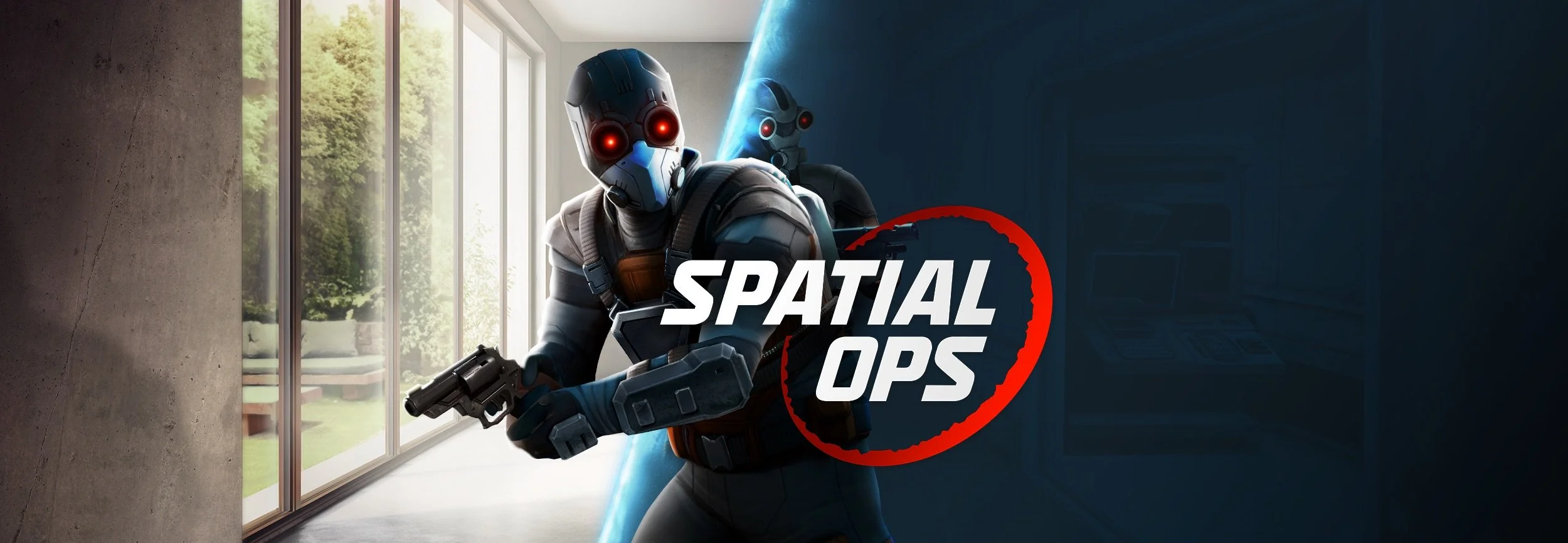
Spatial Ops is a first-of-its-kind mixed reality first-person shooter, where the real and digital worlds merge around you seamlessly. Players can spend hours fending off enemies in campaign mode or experience the magic of co-located multiplayer in the all-out laser tag-like arena mode. Player’s homes are turned into a futuristic play space and marks the first time player’s bodies actually become the controller. The result is an intense, adrenaline-fueled experience unlike anything else in gaming, marking a significant leap forward for the industry!
How many people are in your team/studio?
There are about 120 people at Resolution Games, and the team for Spatial Ops has varied over time reaching about 20 members at its peak development time.
What was your inspiration in creating this game?
At Resolution Games, we are constantly on the hunt for new ways to push the boundaries on the latest XR technologies. During the ideation phase of this game, we initially set out to make a simple AR shooter. As it turns out, the team’s vision holder, Niklas Persson, was also the producer for Battlefield 1942 then later went on to start his own laser tag arena. Given his background, he had the realization that we could actually bring the Battlefield Arena home to the players with the use of Meta Quest, and that became the primary goal. This also then grew in scope over time to include a large variety of weapons and virtual covers, a sophisticated map building tool for the players, inclusion of classic game modes and finally a Time Crisis inspired single player mode.
Why mixed reality?
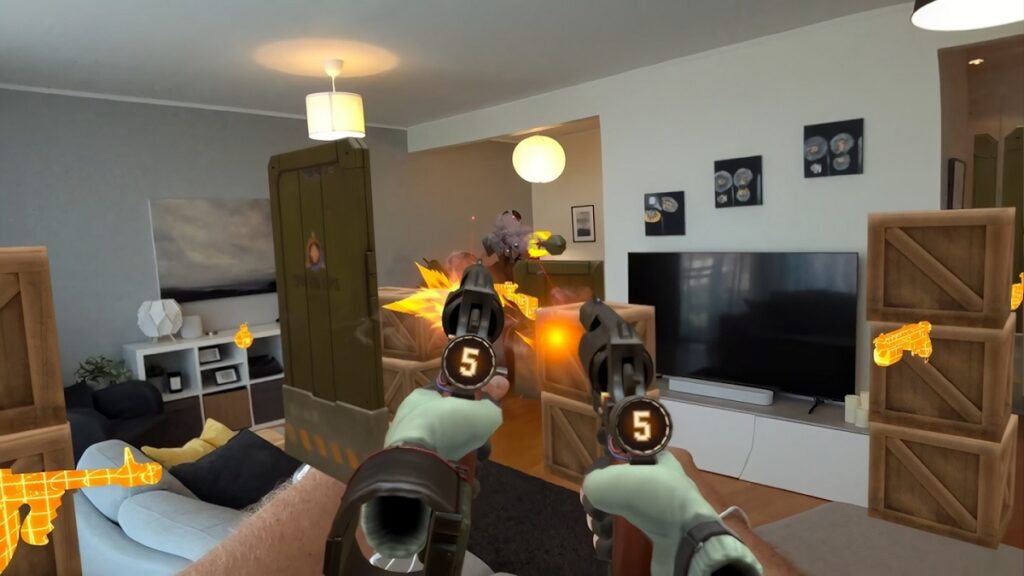
One was players’ level of comfort while moving around in the headset – and I don’t mean the physical comfort of the headsets, but rather the level of comfortability a player allows themselves to feel when they can also see their surroundings rather than being fully immersed. When players feel comfortable enough to not worry about running into the walls, tripping over their dog or coffee table, banging into the corner as you dodging opponents’ fire, that takes the game to a whole new level of enjoyment and immersion in itself.
Also shooters have - until now - been very difficult in VR because the movement can cause motion sickness for some players. Now, for the first time thanks to the latest passthrough/MR technology a FPS is more “VR friendly.”
What were your most interesting technical challenges?
Blending physical and virtual spaces presented many technical challenges. One of these was co-location: How do you ensure players are correctly positioned relative to each other and the physical space?
When using Meta's Shared Anchor feature for co-location, we had to address numerous edge cases. This involved informing players about potential alignment issues and providing clear instructions on how to proceed if problems arose. Our goal was to avoid experiences where players felt lost or frustrated with the game.
Another challenge was creating a seamless experience. We realized that Mixed Reality (MR) games need almost zero 'fade-in, fade-out' black screen loading. The experience has to feel active all the time, with passthrough enabled. Optimizing and making sure that loading level environments and other elements run asynchronously to avoid any jittery or frozen frames throughout the game was a significant hurdle.
Optimizing network data packets sent from the client to the host during gameplay was also crucial. VR headset input is inherently 'noisy,' unlike console or PC input, which typically consists of simple binary values (like a button being pressed or not pressed). VR input includes a much wider range of data, such as hand and head tracking, finger positions, and more.
When did you first learn about bHaptics?
One of our first experiences with bHaptics was actually at GDC a few years back.
Why did you choose to integrate?
After we met at GDC, we received some testing devices from bHaptics. From there, the integration became a natural next step.
What was it like working with the bHaptics team?
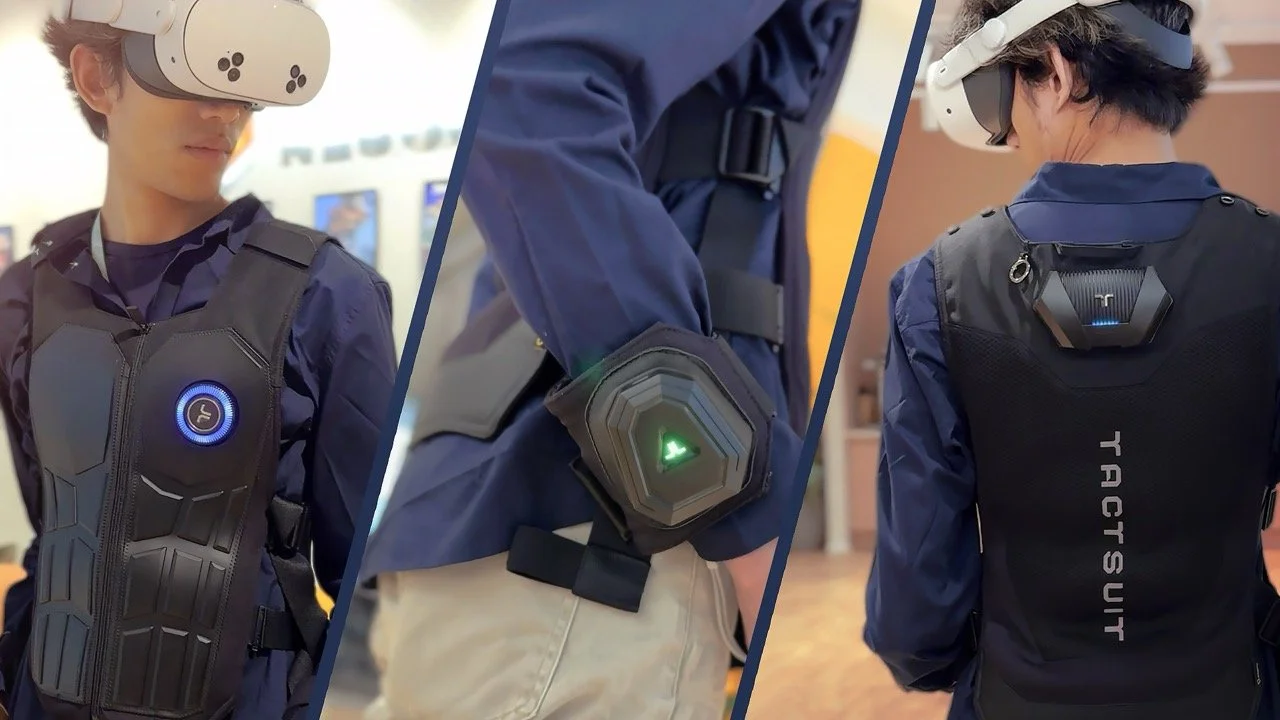
The bHaptics team has been great to work with! They’ve all been very responsive and supportive throughout the testing and integration process
What’s next for your team?
We have a lot going on at Resolution Games! You may have seen that later this year we will be launching Demeo x Dungeon & Dragons: Battlemarked for PC, consoles and XR devices, which we are very excited about. We’ve also been working on Pickle Pro for Apple Vision Pro as well as expanding Spatial Ops to LBE locations, so it’s been great to see a resurgence of arcade popularity.
Leave a message for your community!
Come join the fun! Join the official Spatial Ops Discord and stay tuned to resolutiongames.com for more updates across all of our games!